


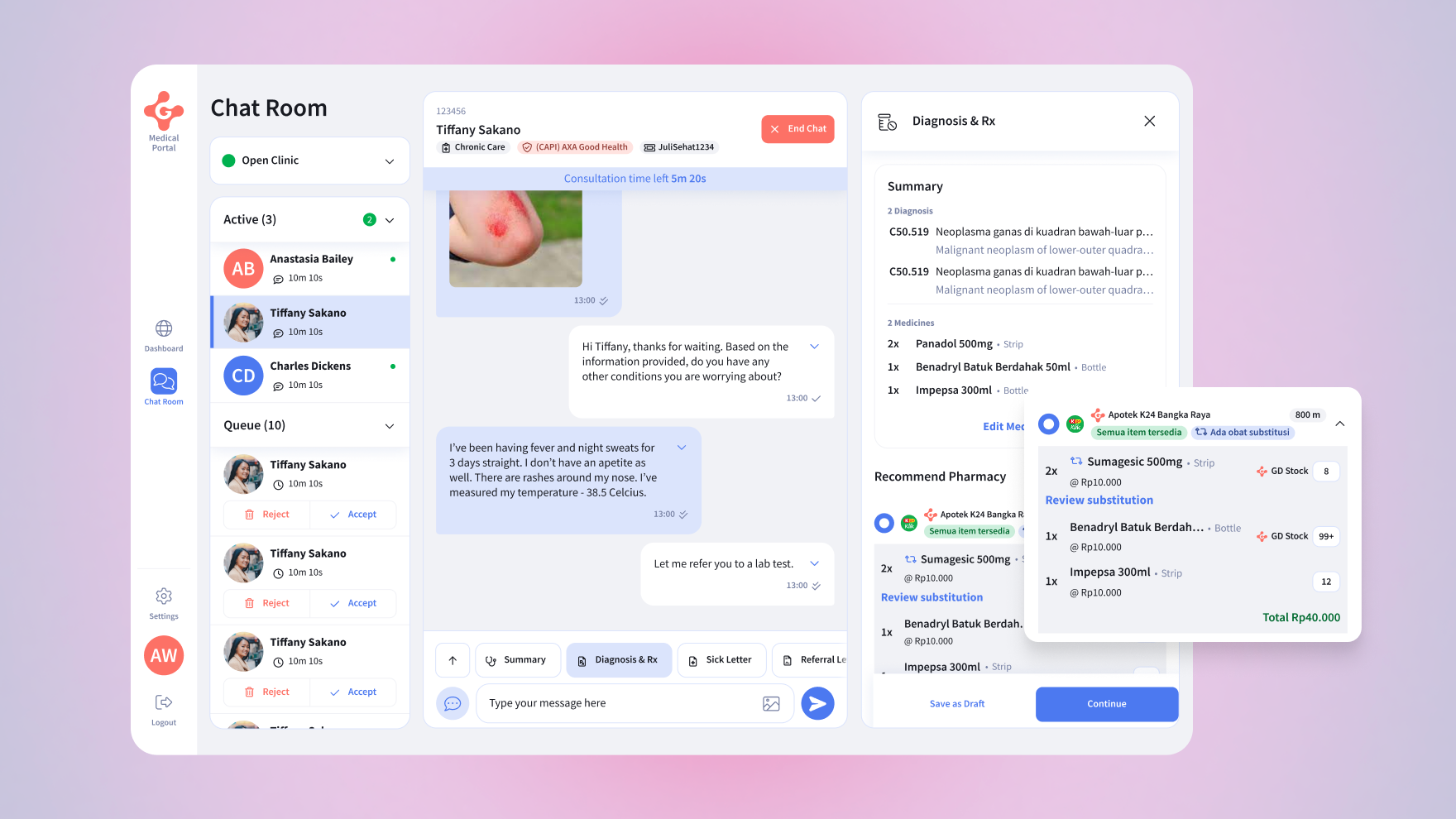
Good Doctor is a health-tech company that provides online doctor consultations, medicine delivery, and health services all in one app.
In this project, we explore how a streamlined drug-substitution feature can help minimize drop-offs between prescriptions issued during consultations and completed medication orders.
Fulfilling orders for prescribed medicine relies heavily on stock available in pharmacies nearest to the patient.
However, it is impossible to ensure that all medicines that the doctor prescribes will be available in the nearest pharmacies, since:
- The doctor prescribes the medicines most suitable to the patient’s needs first, before seeing pharmacy options.
- Different areas/pharmacies have different stock availabilities, and there’s no way for a doctor to know the exact stock of the nearest pharmacies.
By leveraging formulation data that we have of all medicines, we’re able to:
- Systematically map medicines from different brands that could substitute for each other.
- Automatically find alternatives to unavailable medicines in the pharmacy and suggest them to doctors.
- ~2% increase in order fulfillment rate
- ~38% reduction in the number of orders cancelled due to stock being unavailable
Learning from real-world insights to optimize operational efficiency.
In cases where there’s prescribed medicine is unavailable in the given pharmacy, patients have two options:
- Download just the prescription letter and purchase the medicine on their own, OR
- Contact our customer experience team to have them find alternatives and place an order manually.
Neither option is ideal for patients, as both increase wait times and the effort required to obtain medication. Improving the fulfillment rate is therefore essential for patient satisfaction.
When patients contact our team for help, our team will check if there are alternatives with the same/similar formulation available in the pharmacy. Then, after confirming changes with our medical team, an order is placed on behalf of the patient using our internal tools.
We see an opportunity to take this process that we’ve been doing manually and mimic it in our digital flow, in a more streamlined and efficient way.
We came up with a flow that will enable the system to look for products with the same ingredient & formulation as the prescribed medicine when unavailable and automatically suggest a substitution to the doctor.
To be able to cover more cases, we also design a feature that enables our internal medical team to map specific products as substitutes that might not have the same ingredient or formulation, but are still in the same group/category.
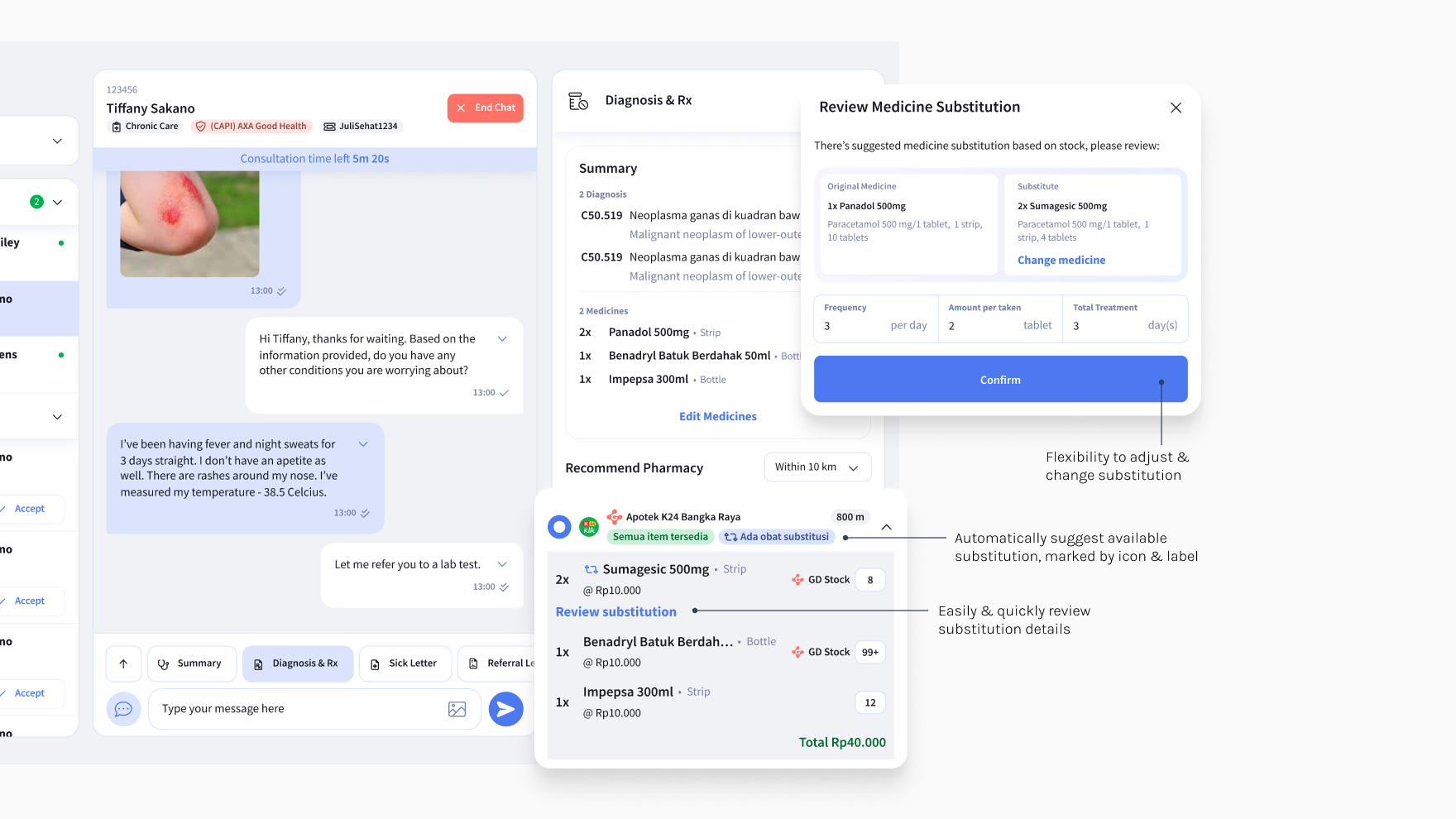
Medicine substitute auto-suggestion
Automatically replace unavailable medicine with a suggested substitution. Doctors are able to quickly review the changes and continue (while still having the flexibility to change the substitute to something else).
Designing within medical regulation boundaries.
Designing for this project had a unique challenge: to creatively make use of the room I had within health industry limitations. When it comes to designing for health-tech, some regulations will have significant implications on design decisions.
For instance:
- Information must be presented to doctors in a way that would not mislead or falsely encourage them to follow the substitution suggestion like it were obligatory,
- There are many cases where substitution cannot be made (such as allergies), so doctors MUST have the final say on what medicines to give a patient, and when they need to adjust things, they should be able to do so easily.
When designing the UI for this feature, providing flexibility is key. I made dynamic layouts that would enable doctors to review, make changes, and continue without substitution.
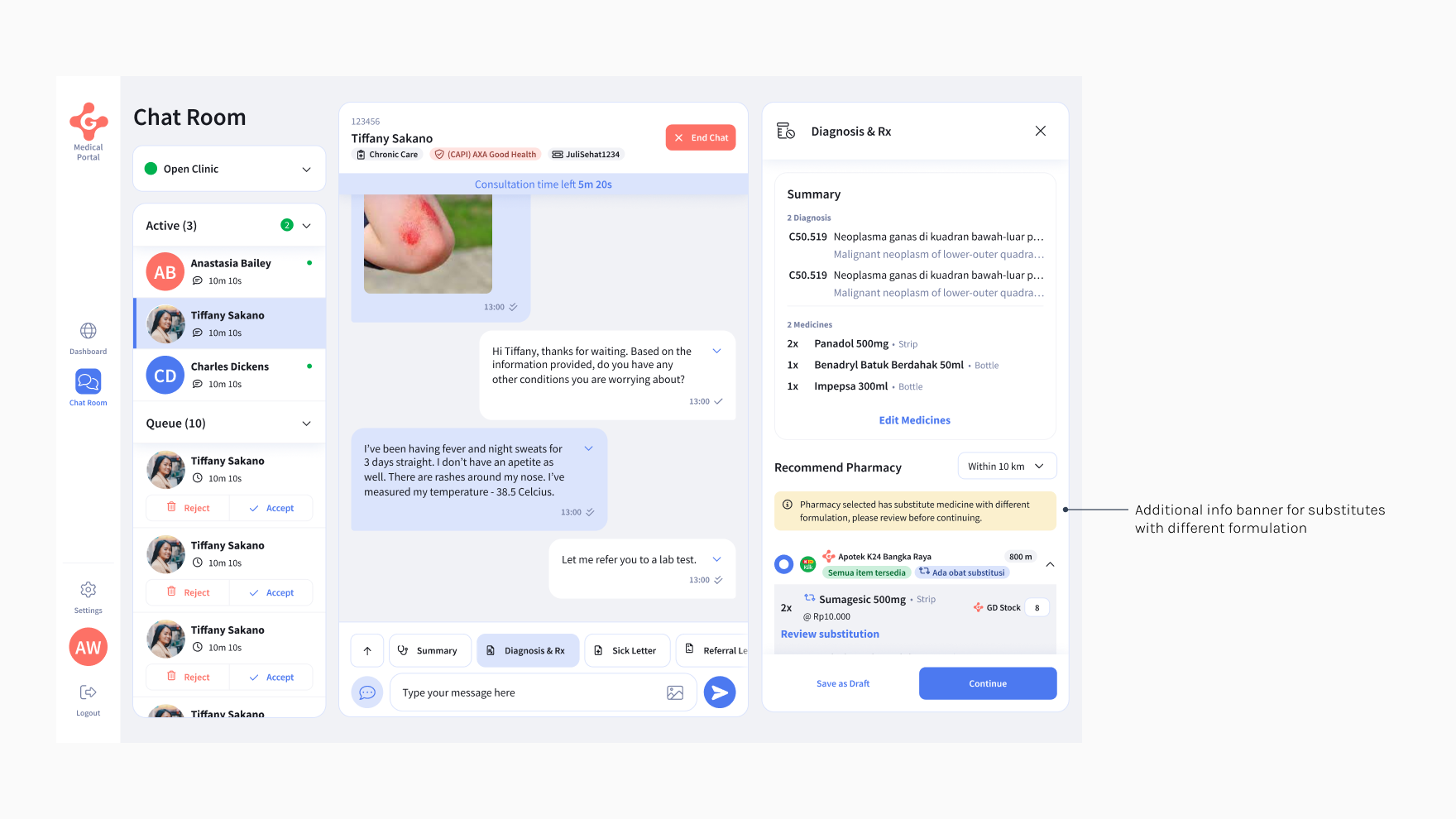
More flexibility for substitutes with different formulations
Banner design made it noticeably different when a substitute has a different formulation, and doctors can opt to continue without substitution.
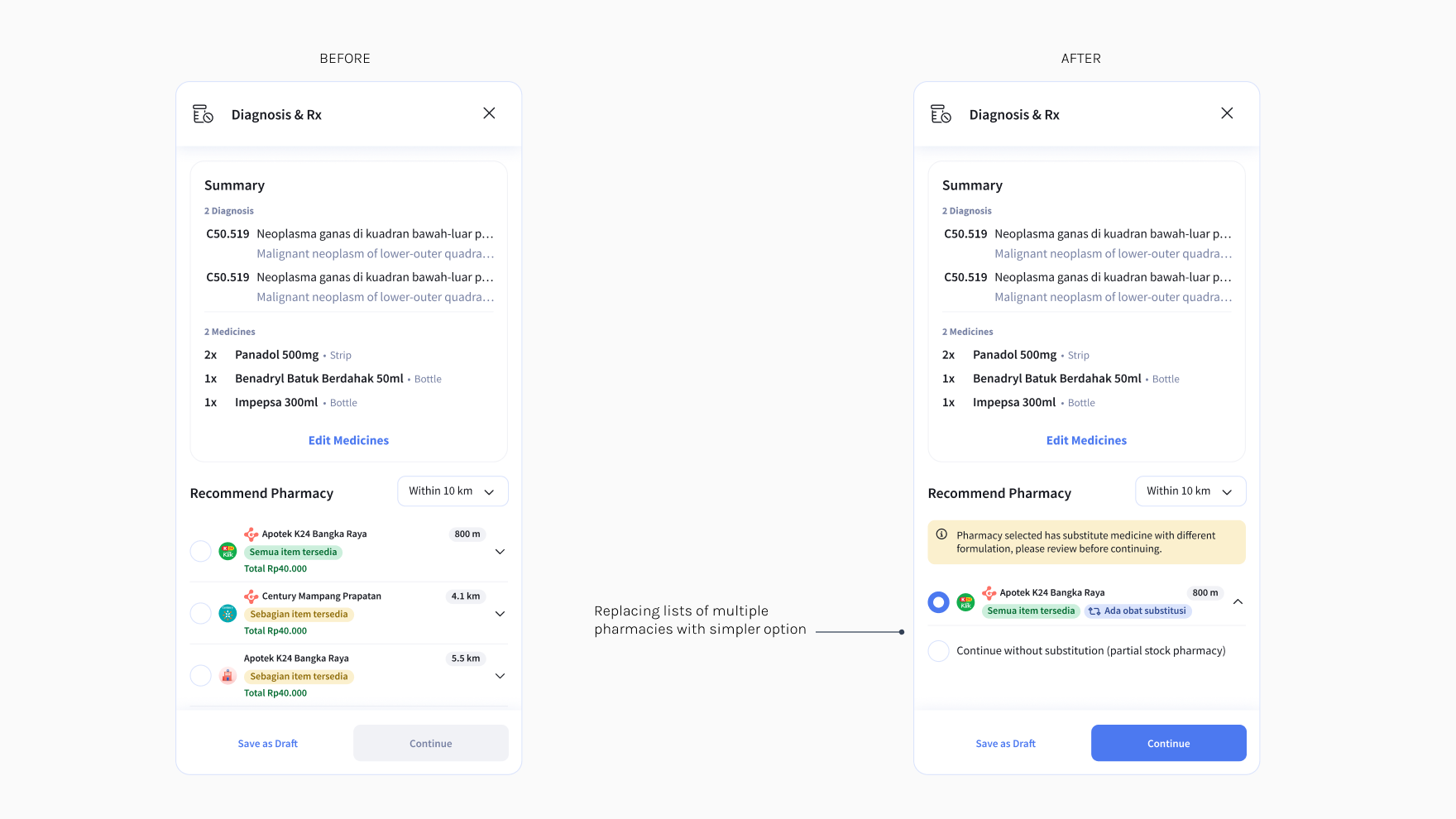
Minimizing decision fatigue to focus on the important one
The design strategically hides a list of pharmacy options without a substitute and replaces it with one simple option that auto-selects the right pharmacy for doctors.
I also made sure only necessary changes are made to the current layout in order to keep the learning curve as small as possible for doctors, while keeping the changes noticeable enough so they’re aware of them.
We tried several design iterations to find one that makes the most sense in context to the existing flow and is not overcomplicated.
Making necessary sacrifices to strike a balance.
By involving engineers from initial hi-fi UI explorations, we were able to recognize efforts early on. We were aware that developing the complete feature would require more time since it includes multiple platforms and multiple logics.
So, cutting down the scope to release faster and see the impact quicker was the right thing to do. We decided to go with the auto-substitution based on formulation as an MVP, taking less effort but still covering enough cases to see a change.
We tested the finished design on several internal doctors first for a couple of weeks to gather feedback, catch problems, and observe how they use it in real-life settings. After a few adjustments from gathered feedback, we were ready to roll it out fully to all doctors on our platform.
Within a few months after release, we were able to see around 2% increase in fulfillment rate, and the number of orders cancelled due to stock unavailable was reduced by roughly 38%. This gave us more confidence to continue delving into the ideal flow that includes more substitutions from manual mapping.


